By Ben Deatherage
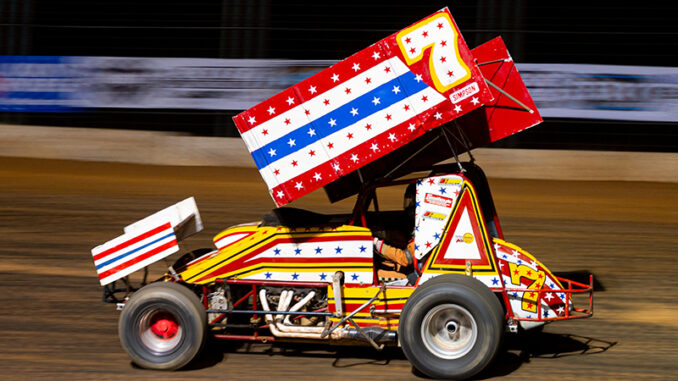
EVERETT, Pa. (Apr. 21, 2026) — RaceSaver IMCA Sprint Car racer Jim “Cowboy” Kennedy never needed much to go racing — just a car, a wrench, and a reason to keep going.
For nearly seven decades, the Pennsylvania native carved out a place in sprint car racing that few could ever match, continuing to compete well into his 90s before his passing on April 2 at the age of 91.
But long before the tributes, the Hall of Famer had already told his story — in conversations with reporters, at racetracks, and in the quiet, in-between moments that defined a life spent chasing the next green flag.
A Life That Spanned Generations
Kennedy was born on August 7, 1934, into a world far different than the one he would come to know behind the wheel of a Sprint Car.
The United States was deep in the Great Depression, with President Franklin D. Roosevelt in the early years of his first term, working to steady a nation searching for its footing as parts of the country endured the choking dust storms of the Great Plains. Through radio sets in living rooms across America, families listened as Roosevelt delivered his Fireside Chats, speaking directly to a nation in need of reassurance.
Federal agents under J. Edgar Hoover were gaining national attention as “G-Men,” tracking down outlaws like John Dillinger and the infamous duo of Bonnie and Clyde during one of the most turbulent crime waves in American history.
At the same time, culture and sport offered an escape.
Hollywood captivated audiences with films like It Happened One Night, where Clark Gable and Claudette Colbert each earned Academy Awards, while The Thin Man became an instant classic. Voices like Bing Crosby and Fats Waller filled radios, bringing music into homes at a time when families gathered close and looked for moments of relief.
On the playing fields, the inaugural Masters Tournament was held, and the St. Louis Cardinals defeated the Detroit Tigers in a seven-game World Series. Stars like Babe Ruth, Lou Gehrig, Mel Ott, Hank Greenberg, and Dizzy Dean were household names.
Max Baer captured the heavyweight championship and the Chicago Blackhawks claimed their first Stanley Cup. At Churchill Downs, Cavalcade won the Kentucky Derby, while future champions War Admiral—son of Man o’ War—and Seabiscuit were just beginning their stories.
Meanwhile, innovation pushed forward with advances like heavy hydrogen and artificial radioactivity, while aircraft such as the Douglas DC-2 signaled a future of faster travel.
And in the racing world, Gus Schrader captured the second of what would become eight National IMCA Sprint Car titles, still a benchmark in the division’s history.
It was into that world — uncertain, evolving, and alive with change — that Kennedy was born.
And over the next nine decades, as history surged forward, he remained rooted in something much simpler.
A racetrack.
A car.
And the will to keep going.
For Cowboy, that journey would begin not long after.
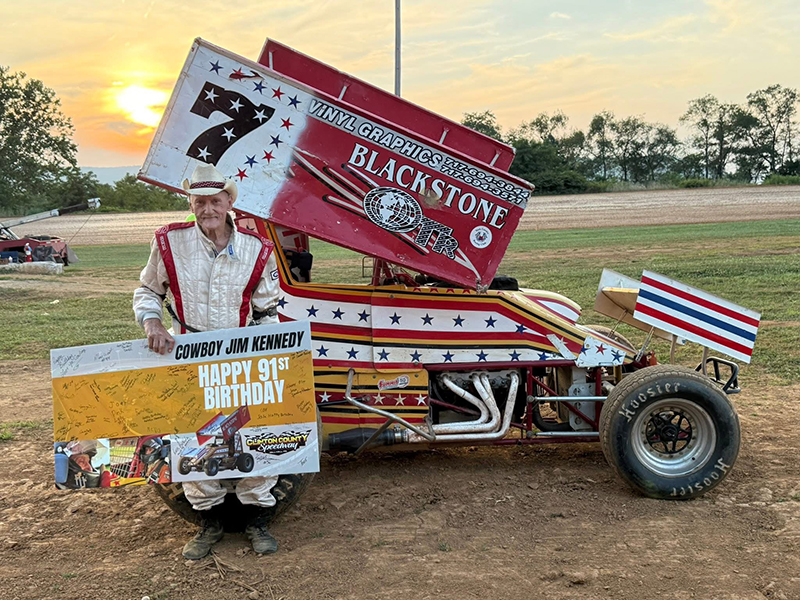
Cowboy celebrates his 91st birthday at Clinton County Speedway in 2025, holding a commemorative banner during a special frontstretch presentation. (Courtesy Photo)
The Sound of the Pits
At place like Clinton County Speedway, Kennedy wasn’t just another name on the lineup — he was part of the rhythm of the place.
In a December 2025 interview with Penn State student journalist Alexandra Wenskoski of the John Curley Center for Sports Journalism, the 91-year-old sat strapped into his yellow and red sprint car before hot laps, helmet on and ready, as the pits buzzed with activity—engines roaring, tools clanging, and crews hurrying to make last-minute adjustments.
And through it all came something unmistakable.
Kennedy yodeled.
It cut through the noise of the pit area, a sound as familiar to regulars as the engines themselves. While other drivers prepared in intensity, Cowboy brought something different — a sense of joy, a reminder of why everyone was there in the first place.
That yodel became his signature.
Years later, it was one of the first things people remembered.
“He would grace us with a grand ole yodel,” Clinton County Speedway promoter Josh McCahan shared, a detail echoed by Morrison Cove Herald correspondent Jordan Rhoat after Kennedy’s passing.
At tracks across Central Pennsylvania, the sound of Cowboy meant the show was about to begin.
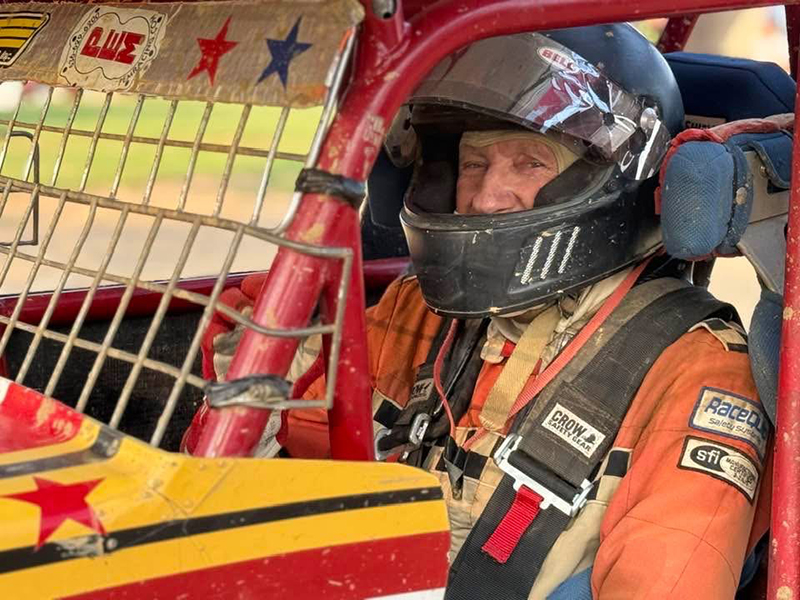
Kennedy sits strapped into his RaceSaver IMCA Sprint Car at Clinton County Speedway during his 91st birthday celebration in 2025. Even late in life, he remained committed to competing behind the wheel. (Courtesy Photo)
A Lifetime Behind the Wheel
Kennedy’s racing story began in 1958, inspired by family and fueled by a lifelong love of motorsports.
He chased that passion across Pennsylvania, eventually competing at 31 different tracks over the course of his career — a number he remembered with pride, even if he couldn’t always find the list he once wrote down.
“I say I like every one of them,” Kennedy said in a 2025 interview with Henry Huber.
One of his most memorable triumphs came in 2008 at Port Royal, where he won against a 29-car field at the age of 73.
“I started in seventh, was car no. 7 and ended up taking first,” Kennedy recalled with a smile in his interview with Huber.
Years later, he added another remarkable chapter, winning at Clinton County Speedway on June 20, 2016 — just six weeks shy of his 80th birthday.
But for Kennedy, it was never about wins or numbers. It was about how he went racing.
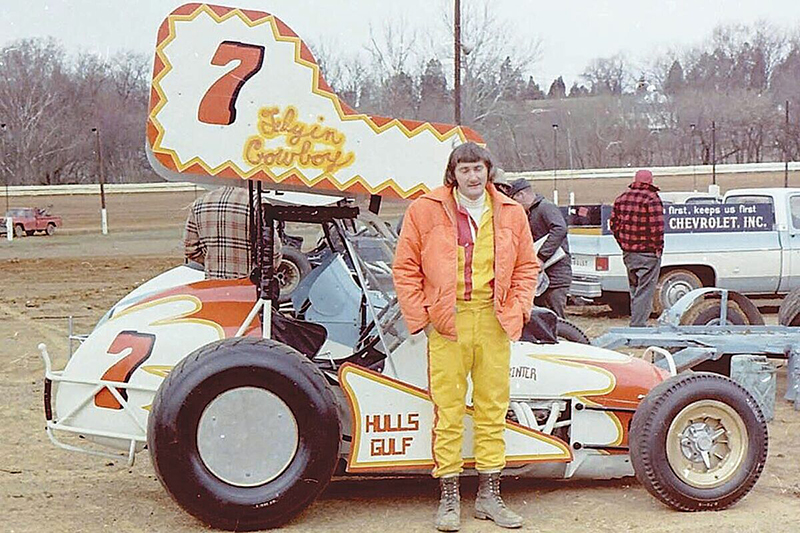
Kennedy poses with his sprint car in 1978. At the time, he was in his early 40s and already two decades into a racing career that would ultimately span nearly 70 years. (Photo by Lloyd King)
Life Beyond the Track
Racing may have been his passion, but it was never his livelihood.
Kennedy worked as a welder on the Pennsylvania Turnpike before later becoming a carpenter and a proud member of his union. He built a life through hard work, raising a family with his wife, Marlene, while using what extra money he had to keep racing.
Together, they shared 72 years of marriage, building a family that included children, grandchildren, and great-grandchildren.
Even as the years went on, racing remained part of his routine.
“I retired when I was 62, and that’s 29 years ago,” Kennedy said in the Wenskoski interview.
“She didn’t want to go no more,” he added of his wife, who stopped attending races but stayed up late waiting for him to return home after long nights at the track.
It was a quiet kind of support — one that matched the steady life he built away from the spotlight.
Doing It His Way
Kennedy’s approach to racing never changed with the times.
While others invested in newer equipment and larger operations, he kept things simple.
Early in his career, he even ran a homemade plywood wing before eventually upgrading to metal years later. He sourced parts from auctions, worked on his own car, and handled nearly every aspect of preparation himself.
In that same 2025 Wenskoski feature, Kennedy described the reality of racing at his age — still independent, but willing to lean on the racing community when needed.
“I’ve got them to help me put the wing on,” he said. “The wing ain’t heavy, but I can’t put it on myself.”
Even then, he remained largely a one-man operation.
He drove himself to the track from Everett, often a two-hour trip. He arrived already suited up, his fire suit worn from years of use — even bearing another driver’s name stitched into it from when he bought it secondhand.
His routine was simple. Grab a couple cheeseburgers on the way. Get to the track. Go racing.
Around him were modern trailers filled with tools, spare parts, and crews.
Next to them was Cowboy — one light, a few wrenches, and decades of experience.
Kennedy’s style of racing—simple, resourceful, and self-reliant—perfectly reflected the spirit of grassroots sprint car competition.
“The whole purpose of PASS and the RaceSaver program has always been to provide a place where a racer with limited resources could compete successfully,” said PA Sprint Series co-director Rod Ort.
“I can’t think of anybody who represented that ideal better than Cowboy. The racing world—and all of us—are blessed to have had him as a competitor and colleague. He will definitely be missed.”
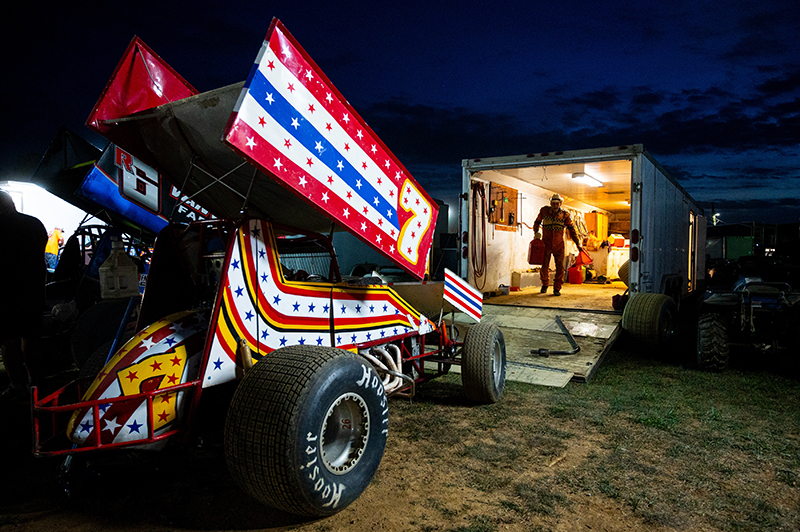
Jim “Cowboy” Kennedy prepares his RaceSaver IMCA Sprint Car from his trailer at Clinton County Speedway during a 2025 race night. Known for his simple, one-man approach, Kennedy handled much of his own race-day preparation. (Photo by Alexandra Antoniono/Penn State)
More Than a Competitor
Over time, Kennedy became something more than just a racer.
He became a fixture.
At tracks like Clinton County Speedway, he wasn’t just part of the program — he was part of the identity. Fans expected to see the no. 7. Drivers expected to share the track with him.
“He’s kind of settled into, ‘I’m not as fast as I used to, so I’m going to run the bottom and try to stay out of everybody’s way,’” fellow IMCA Sprint Car driver Dale Schweikart said in 2025.
Kennedy understood where he fit in the field. He adapted, racing smarter and often choosing to start at the back.
Because for him, it wasn’t about proving anything anymore.
It was about being there.
“It’s all I think about,” he told Huber.
Even in races where he finished at the back of the field, even after crashes or mechanical issues, his outlook never changed. Fix it. Come back. Do it again.
Going Strong
By the time he reached his 90s, Kennedy had become one of the oldest active race car drivers in the country.
Promoters tried to get him recognized in record books. Fans celebrated him. Fellow racers respected him.
At Clinton County Speedway, his 91st birthday became a moment for the entire racing community. The program paused. He was brought to the frontstretch. A banner signed by fans was presented to him as the crowd sang “Happy Birthday.”
He tipped his cowboy hat.
Then he yodeled.
It was everything people had come to expect — and everything they loved about him.
Even then, retirement wasn’t part of the conversation.
“I just kind of like them all,” Kennedy said again when asked about his favorite tracks.
Clinton County Speedway plans to honor Kennedy with a memorial race on August 7 — his birthday.
A Lasting Legacy
Kennedy spent 68 years behind the wheel, competing in Sprint Cars, earning induction into the PA RaceSaver Sprint Car Hall of Fame, and becoming one of the most recognizable figures in Pennsylvania dirt track racing.
But more than the numbers, it was the way he lived his racing life that left the biggest mark.
He showed up.
He did it his way.
And he never stopped.
In the end, maybe the best way to understand Cowboy is through his own words — the same steady, matter-of-fact tone that carried him through decades of racing.
Racing wasn’t just something he did — it was where he belonged. At the racetrack, where engines fire and memories are made one lap at a time, Cowboy was always there.
And for a lot of people, it won’t feel quite the same without him.